
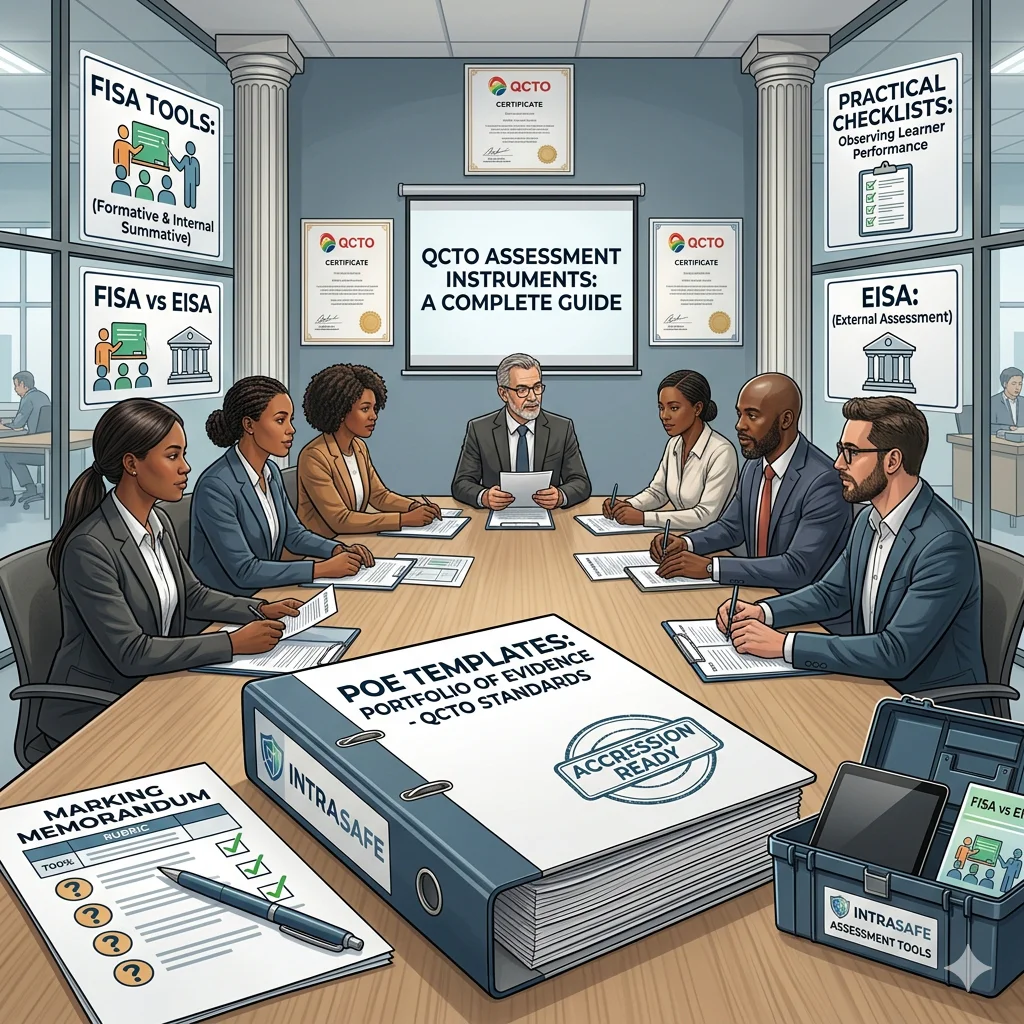
What Are QCTO Assessment Instruments and Why Are They Critical for Accreditation?
The Quality Council for Trades and Occupations (QCTO) requires accredited training providers to use structured assessment instruments aligned with curriculum and occupational competence standards.
If you plan to deliver occupational training, understanding QCTO assessment instruments is essential. These instruments form the backbone of competence assessment and allow training providers to measure whether learners meet occupational requirements. Without properly structured assessment tools, it is impossible to conduct reliable competence assessments or meet accreditation standards.
QCTO assessment instruments ensure that learners are evaluated fairly, consistently, and in alignment with official curriculum outcomes. They provide the structure needed for knowledge, practical, and workplace competence assessments. Providers seeking accreditation or delivering Skills Programmes must ensure they use properly aligned QCTO assessment instruments as part of their training delivery system.
Many accredited providers use structured and curriculum-aligned tools available through INTRASAFE assessment instrument products and QCTO training materials to ensure compliance and readiness.
What are QCTO assessment instruments?
QCTO assessment instruments are structured tools used to evaluate whether learners have achieved competence against curriculum outcomes. These tools allow assessors to measure learner performance objectively across knowledge, practical, and workplace components.
Typical QCTO assessment instruments include:
- Written knowledge assessments
• Practical observation checklists
• Competence assessment forms
• Portfolio of Evidence QCTO templates
• QCTO marking memorandum guides
• Workplace assessment QCTO documentation
These instruments ensure that competence assessment decisions are valid, reliable, and aligned with occupational standards.
Providers typically obtain these tools through structured Skills Programme products designed specifically for QCTO compliance.
These assessment instruments form part of the formal occupational competence assessment framework required by the Quality Council for Trades and Occupations. Their purpose is not only to evaluate theoretical knowledge but to confirm that learners can demonstrate competence in performing real occupational tasks.
Assessment instruments must be designed to evaluate three critical components of competence: foundational knowledge, practical application, and integrated workplace competence. Foundational knowledge confirms that learners understand concepts, terminology, and legal requirements. Practical assessment instruments evaluate whether learners can physically perform tasks according to occupational standards. Integrated assessment instruments evaluate whether learners can apply knowledge and skills together in realistic workplace scenarios.
This structured approach ensures that learners are not merely trained but are competent to perform safely and effectively in the workplace. Properly designed assessment instruments also protect employers, learners, and training providers by ensuring objective, fair, and legally defensible competence assessment decisions.
What’s included in a complete QCTO assessment instrument package?
INTRASAFE develops a complete assessment instrument package includes all tools required to assess learner competence and maintain proper assessment records.
Typical components include:
- FISA assessment tools
• Portfolio of Evidence QCTO templates
• Practical assessment observation checklists
• QCTO marking memorandum and marking guides
• Assessment feedback forms
• Competence assessment decision forms
These structured tools ensure consistent competence evaluation and proper assessment documentation.
Each assessment instrument serves a specific compliance and quality assurance function. Knowledge assessments verify theoretical understanding, while practical assessment instruments confirm physical competence in performing occupational tasks. Portfolio of Evidence documentation provides traceable proof that competence has been demonstrated and assessed according to national standards.
Assessment feedback forms ensure transparency and provide learners with clear guidance on their performance and areas requiring improvement. Competence decision forms formally record whether the learner has been found competent or not yet competent, ensuring assessment outcomes are documented correctly.
These assessment instruments also support internal and external moderation processes, allowing moderators to verify that assessments were conducted fairly, consistently, and in accordance with curriculum requirements. Proper assessment documentation is essential for accreditation, certification, and audit readiness.
What is the difference between FISA and EISA assessment instruments?
Understanding the difference between FISA assessment tools and EISA assessment is essential when working with QCTO assessment instruments.
FISA assessment tools are used internally by the training provider. These formative internal summative assessments evaluate learner progress and readiness for competence.
These tools form part of the official FISA/EISA process, which ensures structured competence evaluation before external assessment.
EISA assessment is conducted externally by authorised assessment centres and forms part of the national certification process.
FISA assessment instruments play a critical role in preparing learners for external assessment. They allow assessors to identify competence gaps and provide corrective guidance before learners proceed to final certification. This improves learner success rates and ensures learners are adequately prepared for occupational responsibilities.
EISA assessments provide independent verification of competence and ensure national standardisation across all training providers. Because EISA is conducted externally, it ensures objectivity and credibility in the certification process. This separation between internal and external assessment protects the integrity of occupational qualifications and ensures employers can trust the competence of certified learners.
Training providers must ensure their internal assessment instruments align fully with curriculum requirements to prepare learners effectively for external assessment.
Do QCTO assessment instruments need to be approved?
Yes. QCTO assessment instruments must align with curriculum requirements and accreditation standards.
Assessment instruments must demonstrate:
- Alignment with curriculum outcomes
• Clear competence assessment criteria
• Objective marking memorandum guidance
• Structured Portfolio of Evidence documentation
These requirements form part of formal accreditation requirements reviewed during the approval process.
What is a Portfolio of Evidence (POE) in QCTO assessments?
A Portfolio of Evidence QCTO is a structured collection of assessment evidence used to prove learner competence.
The Portfolio of Evidence QCTO typically includes:
- Completed assessment instruments
• Practical assessment evidence
• Assessor feedback forms
• Competence assessment decisions
Portfolio of Evidence requirements and national learner achievement records are governed and quality-assured through the South African Qualifications Authority (SAQA), which maintains the National Learners’ Records Database used to verify learner competence and certification.
Providers often use structured POE guides developed by INTRASAFE to ensure proper documentation and compliance.
How should QCTO practical assessments be structured?
A QCTO practical assessment evaluates whether learners can perform occupational tasks safely and competently.
Practical assessment structure typically includes:
- Direct observation of learner performance
• Competence assessment checklists
• Practical task completion records
• Assessor feedback documentation
Providers rely on structured facilitator guides and observation tools to ensure assessment consistency.
What marking guidelines are required for QCTO assessments?
A properly structured QCTO marking memorandum is essential for fair competence assessment.
Marking memorandum guidelines ensure:
- Consistent marking
• Objective competence assessment
• Reliable competence assessment outcomes
These marking tools are included in structured assessment instrument products designed for accredited providers.
Marking memorandums must clearly define correct answers, acceptable alternative answers, and mark allocation criteria. This ensures assessors apply consistent judgement when evaluating learner performance. Without structured marking guidance, competence assessment decisions may become subjective and inconsistent.
Proper marking memorandums also support moderation processes by allowing moderators to verify that assessment decisions were fair and aligned with curriculum standards. This strengthens the credibility of the training provider and ensures compliance with accreditation requirements.
Structured marking guides also assist new assessors by providing clear assessment standards, improving assessment reliability and overall training quality.
Can QCTO assessment instruments be customised?
Yes. QCTO assessment instruments can be customised for organisational context, provided core competence assessment criteria remain aligned with curriculum requirements.
Customisation may include:
- Company branding
• Workplace-specific examples
• Industry-specific assessment scenarios
However, competence standards must remain aligned with curriculum outcomes.
Who conducts FISA vs EISA assessments?
FISA assessments are conducted by the accredited training provider using structured assessment instruments.
EISA assessments are conducted by authorised external assessment centres to ensure independent competence verification.
Providers often obtain professional accreditation support to prepare for these requirements.
Where can you buy ready-made QCTO assessment instruments?
INTRASAFE provides professionally developed QCTO-aligned assessment instrument packages designed specifically for accredited training providers and organisations seeking accreditation readiness.
Many providers choose to use structured assessment instrument products and QCTO training materials that are already aligned with curriculum requirements.
These tools include:
- FISA assessment tools
• Portfolio of Evidence templates
• Marking memorandum guides
• Workplace assessment checklists
Why properly structured QCTO assessment instruments are critical for accreditation
During accreditation evaluation, providers must demonstrate competence assessment capability.
Properly structured assessment instruments show that the provider can:
- Conduct reliable competence assessment
• Maintain proper assessment records
• Support occupational competence evaluation
• Meet national accreditation requirements
Without properly aligned assessment instruments, accreditation approval may be delayed.
Accreditation authorities evaluate assessment instruments carefully to ensure they align with occupational curriculum requirements. Proper assessment instruments demonstrate that the training provider has the capability to evaluate competence objectively and maintain proper assessment records.
Assessment instruments also provide legal protection for training providers by ensuring competence decisions are supported by documented evidence. This protects both the training provider and the learner in the event of disputes or audits.
Providers who implement structured, curriculum-aligned assessment instruments are significantly more likely to achieve accreditation approval and maintain compliance during external audits.
Final Thoughts
National certification and learner achievement records are verified through the South African Qualifications Authority (SAQA). Properly implemented QCTO assessment instruments are essential for delivering occupational training and achieving accreditation readiness. These instruments provide the framework needed to conduct competence assessment, document learner performance, and support occupational training delivery.
INTRASAFE supports training providers by developing fully compliant QCTO assessment instruments, POE templates, and accreditation-ready assessment tools aligned with national occupational standards. Training providers who use structured, curriculum-aligned assessment instruments from INTRASAFE are significantly better prepared for accreditation approval, certification readiness, and long-term training delivery success.


